Thank You Jesus for Everything SVG: T-Shirt Designs
A Brand Designer’s Real-World Review for Local Business Use
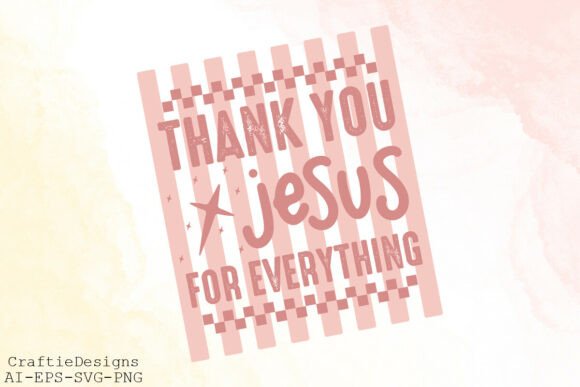
As a brand designer who’s developed visual systems for 17 local businesses—from a family-run Amish bakery in Ohio to a women-led herbal skincare studio in Asheville—I approached the Thank You Jesus for Everything SVG with both curiosity and caution. My first impression? It reads as warm, reverent, and quietly confident—not flashy or performative, but grounded in sincerity. The typography leans toward hand-drawn elegance: soft curves, subtle flourishes, and balanced negative space. It feels organic, not digital; heartfelt, not generic. This isn’t clipart—it’s a considered graphic design asset that suggests a brand personality rooted in gratitude, community, and quiet faith.
Where This SVG Fits Naturally in Real Small Business Branding
I recently used a variation of this Thank You Jesus for Everything SVG as a decorative brand element for “Grace & Grain,” a small-batch sourdough bakery launching seasonal holiday packaging. We placed it subtly on the back flap of kraft paper bread bags—scaled down, in muted terracotta ink—and paired it with their minimalist serif logo. Instantly, it elevated the unboxing experience: customers paused, smiled, even shared photos tagged with #graceandgrain. That’s the power of intentional placement.
This Thank You Jesus for Everything SVG works especially well for:
- Product labels on jars of honey, handmade soap, or small-batch hot sauce—where warmth and authenticity reinforce ingredient trust;
- Packaging accents on gift boxes, tea tins, or candle sleeves for faith-aligned boutiques and wellness brands;
- Hero graphics in social media campaigns—especially during Lent, Easter, or Thanksgiving—paired with real customer stories;
- Thank-you cards and printable inserts tucked into orders from home-based makers or subscription boxes;
- Seasonal campaign visuals, like “Grateful Harvest” stickers for a farm-to-table café or “Blessed Brew” banners for a Christian coffee roaster.
How It Strengthens Local Business Presentation
In my work, I measure design impact by how it supports business goals—not just aesthetics. Used thoughtfully, this Thank You Jesus for Everything SVG contributes directly to:
- Stronger first impression: Customers scanning a farmers’ market table instantly recognize sincerity over salesiness;
- Better product recognition: When repeated across labels, hang tags, and Instagram posts, it becomes a gentle signature;
- Clearer visual hierarchy: Its balanced weight holds its own beside bold product names without competing;
- More consistent brand identity: Especially for handmade businesses juggling Etsy, local pop-ups, and church bazaars;
- Improved customer trust: In faith-connected communities, respectful, non-commercial reverence reads as integrity—not marketing;
- More professional packaging: Even on budget kraft materials, it signals care in execution;
- Better shelf appeal: Among similar products, its emotional resonance stands out more than louder, trendier fonts;
- Stronger emotional connection: Not through sentimentality—but through alignment with values customers already hold;
- More polished marketing visuals: Works seamlessly in Canva templates, web design mockups, and printed flyers without reworking.
Where to Use It Carefully—Not Everywhere
Let’s be practical: this Thank You Jesus for Everything SVG is not universal. As part of a broader brand identity, it should never override clarity or function. Avoid placing it:
- In formal corporate branding (e.g., law firms, financial advisors, medical offices) where neutrality is expected;
- On very small labels (under 1.5 inches wide)—details blur, and legibility suffers;
- In crowded product packaging where it competes with nutrition facts, certifications, or barcodes;
- Near ingredient-heavy layouts—it shouldn’t distract from transparency or compliance;
- In legal information areas (e.g., FDA disclaimers, allergen statements);
- Against low-contrast backgrounds (e.g., light gray text on beige kraft)—always test print contrast;
- Within luxury minimalist brands that rely on silence, whitespace, and restraint;
- Where decoration competes with critical text—like price lists or menu items in a café.
Practical Brand Designer Notes Before You Implement
If you’re integrating this Thank You Jesus for Everything SVG into real small business branding—or recommending it to a client—here’s what I test every time:
- Mock it up on real packaging: Print at actual size on your chosen material—kraft paper, matte sticker stock, or linen cardstock—to assess texture interaction;
- Check black-and-white usage: Does it retain character when stripped of color? (It does—this one holds up well in single-color print);
- Preview on small labels: Scale it down to 0.75” height—does the phrase remain legible and emotionally intact?
- Test with your brand colors: Try it in charcoal, deep navy, forest green, and burnt sienna—not just black or gold;
- Compare with competitor packaging: Does it feel distinct yet appropriate within your category?
- Review print quality: If using PNG, confirm 300 DPI and clean edges; if SVG, verify vector editability for resizing without distortion;
- Inspect transparency: Ensure no hidden white fill or stray pixels that’ll show up on dark packaging;
- Test font pairings: Place it beside serif (e.g., Playfair Display), sans serif (e.g., Montserrat), script (e.g., Pacifico), handwritten (e.g., Qwigley), and display fonts (e.g., Bebas Neue)—note which combinations feel harmonious vs. jarring;
- Confirm commercial licensing: Never assume—verify whether the source grants rights for physical product sales, client work, or resale. This is non-negotiable for professional branding.
For small business owners, handmade sellers, and local brand builders: the Thank You Jesus for Everything SVG isn’t just another T-Shirt Designs download. It’s a versatile, values-aligned graphic design asset—one that, when applied with intention, supports authenticity, builds recognition, and quietly reinforces why customers choose you over the next stall at the market. Use it like a seasoned designer would: sparingly, respectfully, and always in service of your story—not the other way around.